
How much cash should you bring to Vietnam? 2026 Vietnamese dong quick-conversion reference, places to exchange money, and tips to avoid scams (for travelers from Taiwan, Hong Kong, and mainland China)
7/15/2026
How much cash should you bring to Vietnam? It is recommended to prepare 3,000,000 Vietnamese dong per day (approximately TWD 3,900 / HKD 900 / CNY 840). This article consolidates the best money-exchange locations in Ho Chi Minh City, quick-conversion methods for the Vietnamese dong, and payment methods to help travelers from Taiwan, Hong Kong, and mainland China easily handle currency exchange.
Preparing to travel to Vietnam: flights, hotels, and visas are all sorted, and the next most headache-inducing question is: "How much cash should I bring to Vietnam? Where is the best place to exchange money?"
Many travelers who pursue a perfect itinerary tend to take care of everything before departure, including exchanging Vietnamese dong at banks or small currency exchange shops in Taiwan, Hong Kong, or locally. But is this really the best choice? This article compiles the latest 2026 Vietnam money-exchange guide specifically for travelers from Taiwan, Hong Kong, and mainland China, including daily budget recommendations, quick Vietnamese dong conversion methods, and recommended legal exchange locations in Ho Chi Minh City, so you won't overpay and can enjoy Vietnam with ease!
1. How much does it cost per day in Vietnam? 2026 travel budget recommendations
"How much money should I exchange?" This is every traveler's first question.
If your Ho Chi Minh City itinerary mainly includes dining at restaurants to taste authentic Vietnamese food, sampling street snacks, experiencing a Vietnamese hair wash or an essential oil massage, visiting trendy coffee shops for photos, and touring city attractions with low admission fees.
Excluding accommodation and airfare, it's recommended to prepare 3,000,000 Vietnamese dong (VND) in cash per person per day; this gives you a more comfortable budget without worrying about running out.
Of course, spending will vary greatly depending on your personal itinerary. If you plan to shop heavily for clothes or souvenirs, or go to bars at night or experience local KTV, you'll need to increase your budget accordingly.
How much is 3,000,000 VND per day approximately equal to?
- Approximately TWD: 3,900
- Approximately HKD: 900
- Approximately CNY: 840
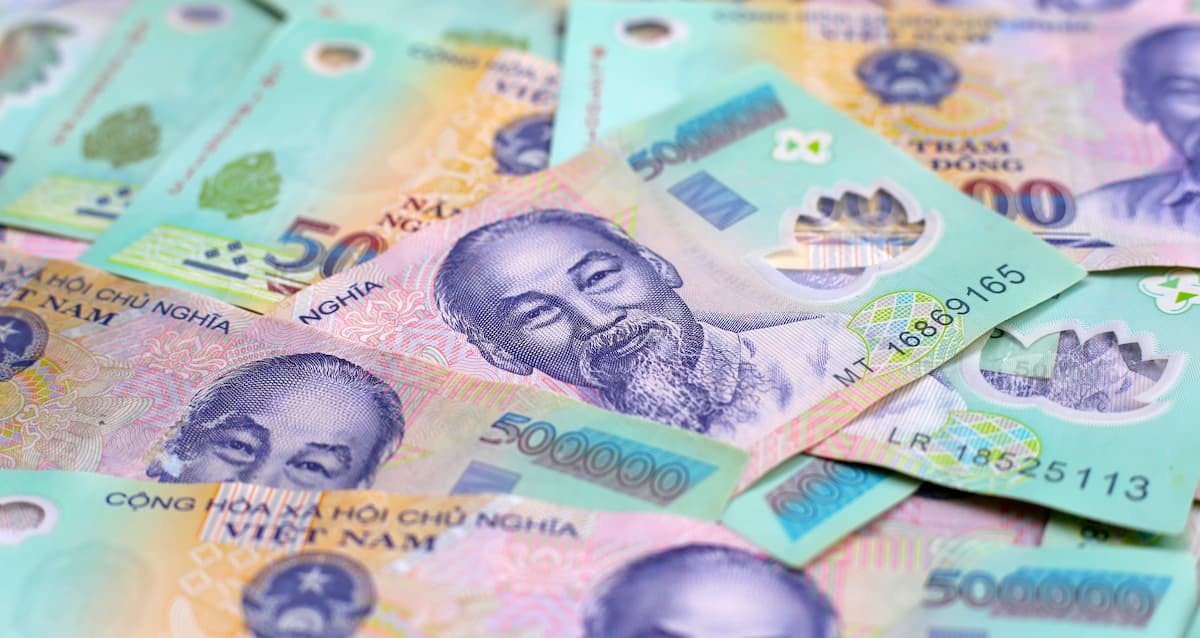
2. Exchange before departure, or exchange once in Vietnam?
Many travelers, for peace of mind, like to exchange Vietnamese dong at local banks or small exchange shops before departure.
Strongly recommended: only exchange a small amount of Vietnamese dong before departure (about TWD 1,000–2,000 / HKD 300–500) as a backup; for larger sums, bring US dollars or TWD/HKD to Vietnam and exchange there.
The reasons are as follows:
- Exchange rate differences: whether it's banks in Taiwan or Hong Kong, or small exchange shops, the rates they offer for Vietnamese dong are usually worse than those in Vietnam. Some small exchangers may offer slightly better rates than banks, but they still can't beat exchanging in Vietnam. Using new US $100 bills in Vietnam, or directly exchanging TWD/HKD there, will get you much better rates.
- Initial arrival needs: after landing, if you've pre-booked a Grab ride (charged directly to your credit card), you actually don't need cash at first. The small amount of Vietnamese dong exchanged in advance is just for hotel tips or your first street food meal.
3. 2026 new Vietnam currency-exchange policies and money-exchange locations in Ho Chi Minh City
In 2026, the Vietnamese government implemented stricter regulations against illegal currency exchange. Exchanging money at unauthorized gold or jewelry shops not only risks fines for the businesses, but tourists caught may also face hefty fines or even confiscation of transaction funds.
Therefore, be sure to choose legally authorized exchange offices.
Recommended legal currency exchange offices in District 1, Ho Chi Minh City
If you're staying in District 1, Ho Chi Minh City, the following two are the most well-known and legal exchange offices locally:
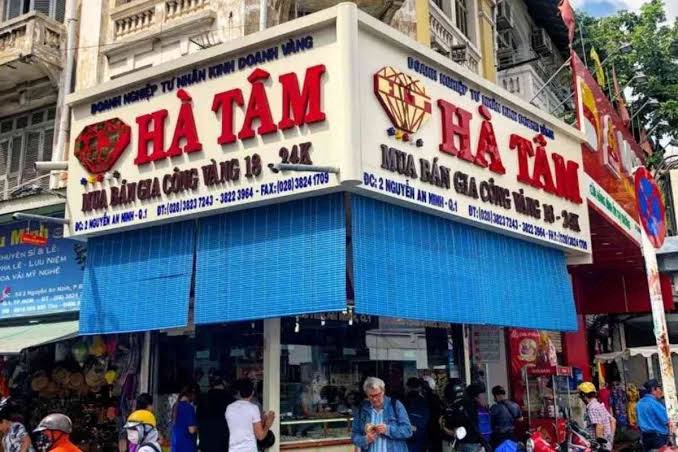
1. Ha Tam Jewelry (next to Ben Thanh Market)
- Advantages: the exchange rate is usually the best in all of Ho Chi Minh City and it's the most well-known exchange point.
- Disadvantages: you queue outdoors and can get very sweaty in hot weather; also, counting large amounts of cash by the roadside can be stressful.
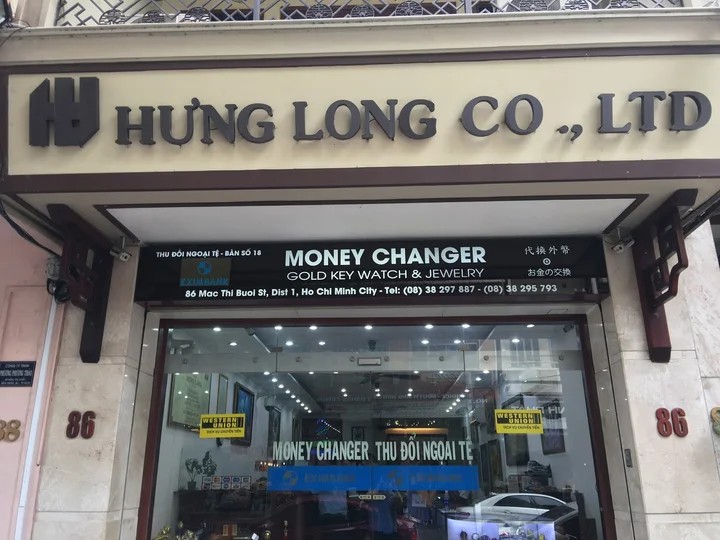
2. Hung Long Money Exchange (near the Cafe Apartment)
- Advantages: has an air-conditioned shopfront with seating where you can sit and calmly count cash; well-organized flow and a safe, comfortable environment.
- Disadvantages: the exchange rate is slightly worse than Ha Tam's (a difference of a few dong per unit exchanged, not a major overall impact).
Local advice: because Ho Chi Minh City is hot, for safety and comfort many travelers prefer exchange offices with air conditioning and seating for counting money (like Hung Long), avoiding queuing under the sun and reducing the risk of pickpocketing.
4. How to read Vietnamese dong's large denominations? 3-second quick calculation method
Vietnamese dong denominations easily run into tens of thousands or hundreds of thousands, and seeing "100,000" on a menu can be dizzying. Here's the simplest quick calculation method so you can instantly calculate prices at the market and not get shortchanged!
Local prices in Vietnam often omit the last three zeros (i.e., "K"). For example, a listed price of "100" represents 100,000 VND.
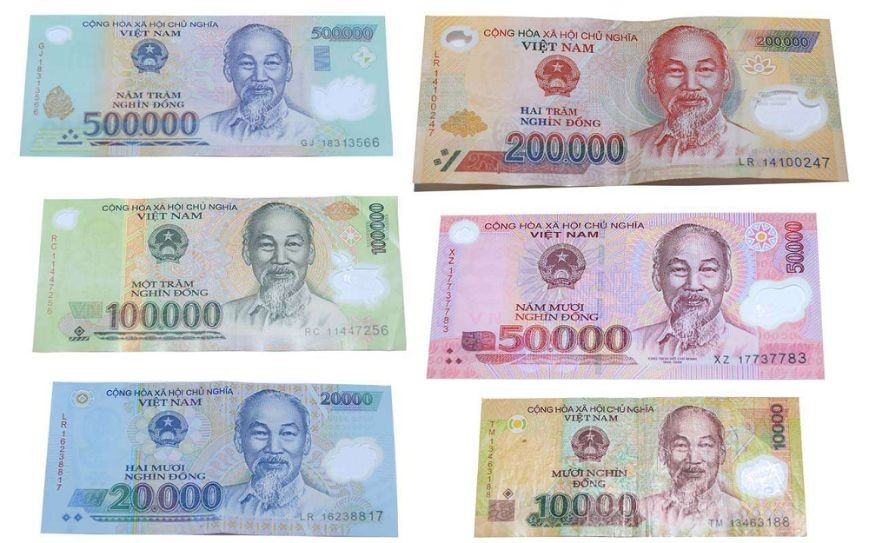
Quick method for Taiwan travelers (drop three zeros × 1.3)
Seeing a price of 100,000 VND:
- Drop three zeros → 100
- Multiply by 1.3 → approximately TWD 130
Quick method for Hong Kong travelers (drop four zeros × 3)
Seeing a price of 100,000 VND:
- Drop four zeros → 10
- Multiply by 3 → approximately HKD 30
Quick method for mainland China travelers (drop four zeros × 2.8)
Seeing a price of 100,000 VND:
- Drop four zeros → 10
- Multiply by 2.8 → approximately CNY 28
(Note: the above are approximate values for easy mental calculation; please use the exchange rate of the day for actual amounts.)
5. Are credit cards, Alipay and WeChat Pay convenient in Vietnam?
With the increase in international travelers, payment methods in Vietnam are becoming more diverse:
- Credit cards: In Ho Chi Minh City, mid-to-large restaurants, cafés, department stores, Spa massage shops (such as Win Royal Spa), and Grab rides commonly accept and find it very convenient to use Visa or Mastercard credit cards.
- Alipay and WeChat Pay: Since 2026, through cross-border QR payment cooperation, mainland Chinese tourists can directly use Alipay or WeChat Pay at some merchants, restaurants, and duty-free shops in Vietnam that support the NAPAS network. However, adoption in traditional markets or street food stalls is still not as high as cash.
Conclusion: Prepare enough cash for snacks, tips, and traditional markets, and use cards for larger expenses (such as big meals, SPA, shopping) — that's the easiest and safest approach.
6. Conclusion: Exchange your money and enjoy the ultimate Vietnamese relaxation!
Once you've taken care of the money exchange, your Ho Chi Minh City trip can officially begin!
After shopping and enjoying delicious food in the city, don't forget to treat yourself. Win Royal Spa, located at No. 48 Le Thi Hinh Street, District 1, Ho Chi Minh City, offers authentic Vietnamese hair wash, deep essential oil massages, and four-hand massage services. We have transparent pricing and accept cash and credit card payments, making us your best choice to relax in Ho Chi Minh City. Book now to experience the most authentic Vietnamese services!